Tutorial
How to make an RC car faster
Updated November 1, 2026
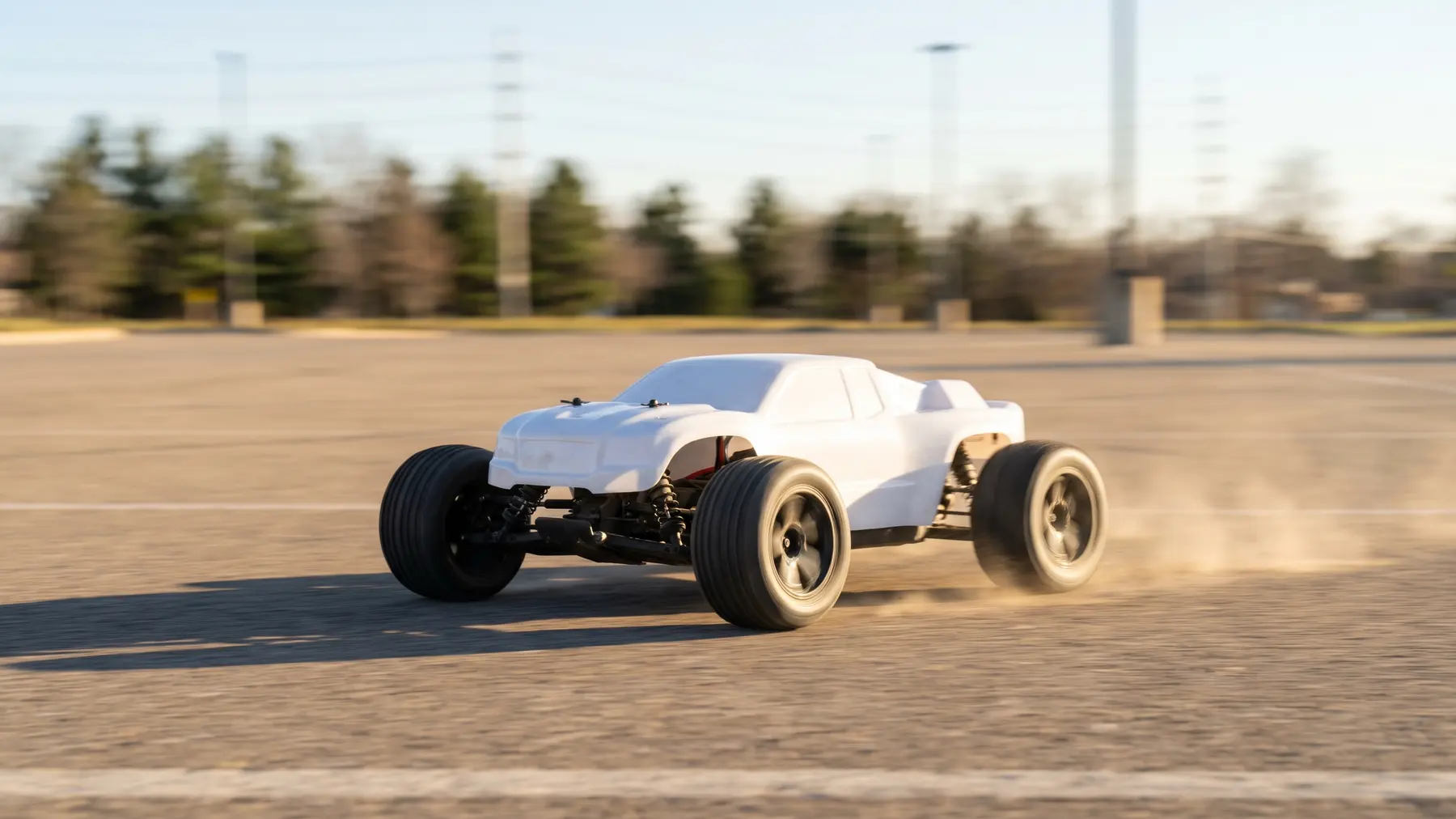
If you want to know how to make an RC car faster, start with the free fixes, then change gearing one tooth at a time, then move from a 2S to a 3S LiPo battery, and only then think about brushless power. Every step after the free ones adds heat and stress to the motor, the speed control (ESC) and the drivetrain, so you check temperatures after each change.
Set your expectations by the car you own. A brushed 2WD truck like the ARRMA Gorgon, which the maker rates at 20+ mph, will get quicker with tuning but never fast. A brushless truck that already accepts 3S has the most room to go faster with gearing and a bigger battery. Past that, we think a faster car is usually a better use of money than a stack of parts.
Below are eight steps in the order we'd do them, each with its cost, its risk and how to check it worked. Then come sections on cooling, breakage, which trucks take 3S, measuring real speed and when to buy something faster. Crawlers and drift cars are built for control, so this guide is aimed at bashers, short course trucks, stadium trucks and buggies.
This guide draws on maker manuals and owner reports. Always follow the manual for your own battery, charger and car when it differs from what we say here.
What you need
- An infrared thermometer to read the motor can and the ESC
- Hex drivers and a nut driver that fit your car
- A pinion gear one tooth bigger and one tooth smaller than stock
- A brush and compressed air for cleaning the drivetrain
- A strip of printer paper for setting gear mesh
- A LiPo charger with balance mode and a LiPo-safe charging bag
- A GPS speed logger or radar gun, plus a notebook for logging runs
Step by step
- Step 1
Turn off throttle limits and calibrate the ESC
This step is free, and it only helps if something is holding the car back. Many starter radios can cap the throttle. The Gorgon's SLT2 transmitter can limit speed to 50% or 75%, which reviewers and owners value for beginners, but it's easy to leave that set and wonder why the truck is slow.
Find the throttle limit dial, menu setting or training mode and set it to 100%. Then run the calibration routine in your ESC manual so the speed control learns where neutral and full throttle sit on your radio. Leave the rest alone for now. Training modes only cut power, and drag brake only changes how the car slows when you release the trigger. Punch, the setting for how hard the car launches, helps acceleration more than top speed. More motor timing can raise rpm but adds heat, so save it for last.
Cost is $0. The risk is a car that's suddenly quicker than its driver, so put the limit back for kids. To check it worked, run the same stretch of ground before and after. If a limit was on, you'll see it right away. If not, nothing changes and you move on. This step removes handicaps rather than adding power.
- Step 2
Free the drivetrain before you add any power
A binding drivetrain, gritty bearings, bad gear mesh or chipped teeth all turn motor power into heat and friction. One source advises fixing friction, bearings and gear mesh before adding power. Pull the battery, lift the car and spin each wheel by hand. The wheels should turn freely and coast. One that drags points to a dry bearing, a bent driveshaft or a tight differential.
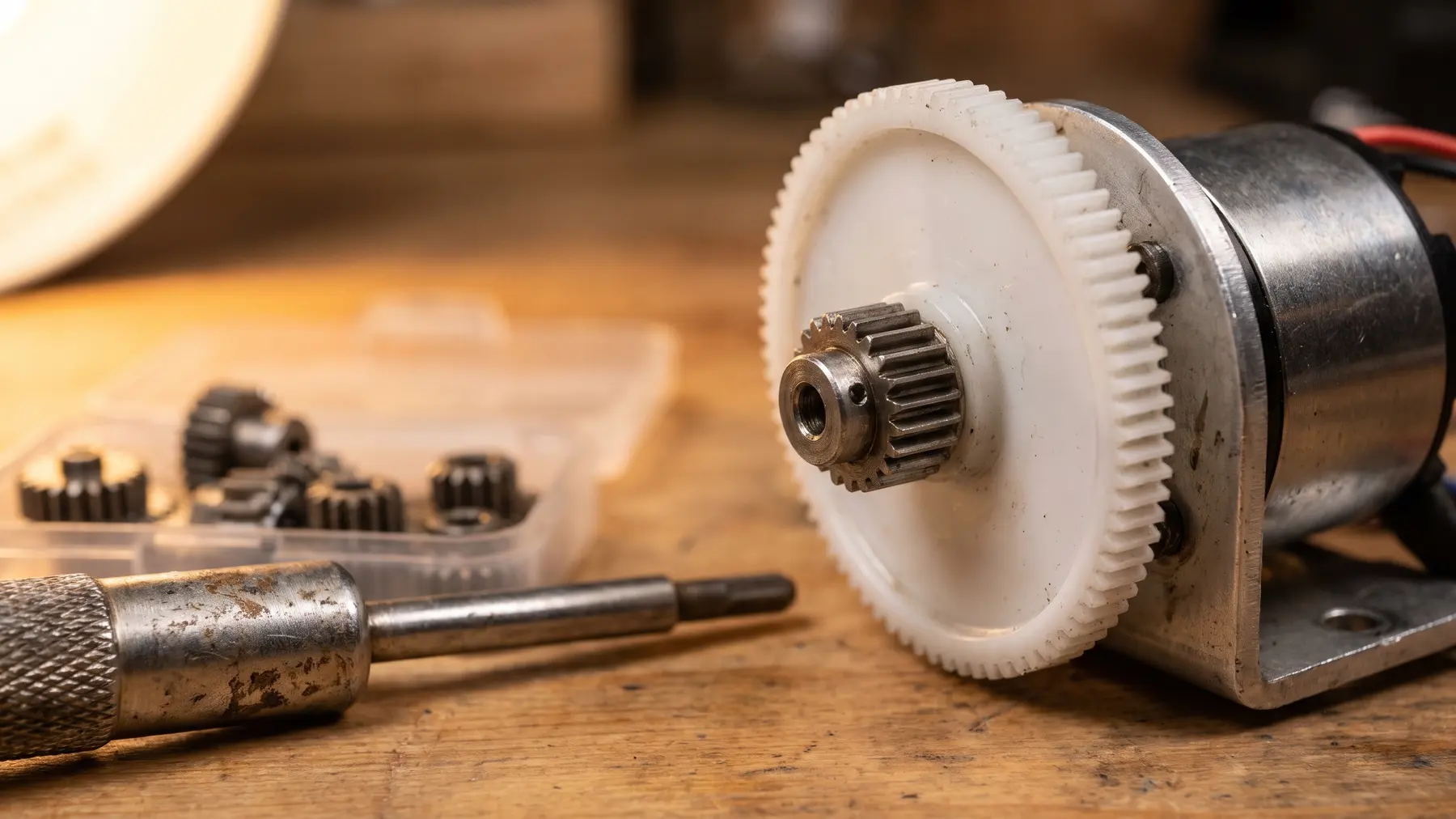
Clear debris with a brush and compressed air. Replace any bearing that turns rough and any gear with damaged teeth. Then reset gear mesh, the gap between the pinion (the small gear on the motor) and the spur gear (the big gear it drives). Slip a strip of printer paper between them, push the motor in so the gears pinch it, tighten the motor screws and pull the paper out. You want a hair of play, not a tight fit and not a loose one.
Cleaning costs nothing. Bearings or a spur gear cost whatever yours run if they're worn. The risk is low, but tight mesh adds heat and wears teeth, and loose mesh strips them. To check, take a temperature reading after a 3 to 5 minute run before and after the work, using the method in the cooling section below. A cooler motor on the same run means less wasted power, and the wheels should coast farther.
- Step 3
Set the slipper clutch and sort out the tires
The slipper clutch is a friction clutch in the drivetrain, usually on the spur gear, that slips under shock so gears and shafts don't take the full hit. Too loose and it wastes acceleration. Fully tightened, it passes shock loads straight into gears and shafts. Follow your manual's method so it slips briefly when you punch the throttle from a stop, then grabs.
Next, the tires. Tires that balloon at speed, meaning they swell and grow in diameter, cost stability and some top end. One source recommends checking the tire inserts when that happens. Replace torn or worn tires too, since Rustler 4X4 VXL owners report tires that tear after very little use. Bigger tires raise effective gearing and load the motor, so treat a tire swap like a gearing change: faster on paper, hotter in practice. One owner report ties larger wheels on a brushless build to repeated gearbox failures.
The clutch adjustment is free, and tires cost whatever a new set runs. The risk is heat and drivetrain strain from taller tires. To check, make several full-speed passes and watch whether the tire shape holds. If the speed is inconsistent from pass to pass, ballooning is one possible cause. Rule out pack charge, surface and wind first.
- Step 4
Gear up one tooth at a time
Gear ratio is how many times the motor turns for one turn of the wheels. In most trucks it's spur teeth divided by pinion teeth, times a fixed ratio inside the transmission. A bigger pinion or smaller spur lowers that number. That means higher top speed on paper, slower acceleration, more current draw and more heat. Traxxas' Rustler 4X4 VXL chart shows the range: 13.39:1 with an 11-tooth pinion down to 8.18:1 with an 18-tooth, both on the 54-tooth spur.
Work in a loop. Fit a pinion one tooth bigger, reset the mesh as in step 2 because the new gear moves the motor, run 3 to 5 minutes, then take temperatures and a speed pass. If temperatures are in range and speed rose, go up one more tooth. If the motor ran hot and the car wasn't faster, you've over-geared, so go back. FMS tells owners to change gearing only slightly. Owners of the ARRMA Infraction 6S warn against its 37-tooth speed pinion, a good example of jumping too far.
Cost is a pinion or two, the smallest bill in this guide. The risk is heat in the motor and ESC. The check is the temperature reading plus your speed log. A faster pass at a safe temperature means keep it. The same speed at a higher temperature means undo it.
- Step 5
Confirm the ESC and motor support 3S before you buy a pack
A LiPo (lithium polymer) pack's S number is how many cells it has in series. A 2S pack is nominally 7.4 V and a 3S is 11.1 V, which is about 50% more theoretical motor speed at the same Kv and gearing. Kv is a motor's approximate unloaded rpm per volt, so more volts means more rpm. Real gains are smaller because of load and voltage sag, but we think 3S is the best-value jump for a truck built for it.
Check two ratings in your manual or on the maker's page. The ESC must explicitly list 3S. The motor must be approved for it too. Robitronic gives a Hobbywing example of a motor family approved to 6000 Kv on 2S but only 3500 Kv on 3S. Hobbyists describe a 3700 Kv motor as already very fast on 3S and suggest 2S for durability in some vehicles. The section on which trucks take 3S lists the ones we cover.
If you have neither pack nor charger, the Typhon, for example, needs a 2S or 3S hardcase LiPo, a LiPo charger and a charging bag, and packs must fit its 147 x 51 x 48 mm battery space. Check that the pack fits the tray and that the connector matches your ESC, since connectors differ between makers. The risk is added stress on every drivetrain part. Step 6 covers the check.
- Step 6
Charge in LiPo balance mode, then run 3S on lower gearing
Set the charger to LiPo chemistry, balance mode and your pack's cell count, and charge inside a LiPo bag on a non-flammable surface. Our guide to charging a LiPo battery covers the settings. Don't leave a charging pack alone, and stop driving when the car slows or the ESC cuts power rather than running the pack flat.
Then go down in pinion size from your 2S gearing. We'd start one tooth smaller. Higher voltage can call for lower gearing and stronger parts, so check temperatures right after the switch. Run 3 to 5 minutes, take temperatures and make a speed pass. The ARRMA Typhon 223S shows the scale of the change: the maker claims 35+ mph on 2S and 50+ mph on 3S, with no gearing or tire conditions given. Once temperatures are in range, climb back up one tooth at a time.
There's no new cost beyond step 5. The risks are heat, stripped spur and differential gears, and LiPo handling. To check, compare a full 3S pack's speed log against your 2S log. If the gain is small and the motor runs hot, go back to 2S, which hobbyists say can be easier on parts.
- Step 7
Convert to brushless only on a car built for it
A brushed motor uses physical brushes to switch current. A brushless motor doesn't, so it's more efficient and needs less maintenance. Traxxas claims its Slash 4X4 BL-2s gets up to 60% more speed and faster acceleration than comparable brushed systems, which is a maker claim for one system. Owners report brushless adds a lot of torque and keeps pulling where a brushed motor would stall. They also report stripped gears and broken shafts when the drivetrain wasn't designed for it. One owner report names slipper clutches and differential input gears as the weak points.
A conversion needs a brushless motor, a compatible brushless ESC, a battery and connector, motor mount hardware if the new motor is a different size, correct pinion and spur gearing, and a radio setup the ESC accepts. Budget for stronger slipper-clutch parts, differential gears, driveshafts or a spur gear on top. The Gorgon is the friendly case. It runs a MEGA 550 14T brushed motor, and its transmission is described as brushless-ready.
Price the motor, ESC and drivetrain parts you'd need before ordering. Then compare that total with the ARRMA Granite 223S at $339.99 plus a LiPo and charger. It already has a Spektrum 3100Kv brushless motor. If you do convert, run 2S first, reset gearing, and inspect the slipper, diffs and driveshafts after every pack.
- Step 8
Stop and price a faster car before the next upgrade
The last step is a decision. Add up what the next upgrade needs: motor, ESC, battery, charger and the drivetrain parts it will expose as weak. Divide by the mph you expect to gain, using your own speed log from step 6 rather than the box. If the bill climbs toward the price of a ready-to-run brushless truck, stop.
Cost is your time and a calculator. The risk is the opposite of a broken part: pouring money into a platform that was never meant to be fast. You'll know it worked when you have three numbers in hand: your measured top speed, your temperatures and a price for the next jump. The final section names the cars we'd look at.
Check motor and ESC temperatures after every gearing change
Heat is the price of speed, and it's what kills motors and ESCs. After each change, run the car for 3 to 5 minutes at the pace you actually drive, stop right away and take readings. Point an infrared thermometer at the motor can and at the ESC. Don't bother reading the battery or chassis, which tell you little about the motor.
Targets differ, so pick a conservative one. A general brushless guideline is below 160 to 180°F (70 to 82°C), and the motor maker's limit takes priority. A hobby temperature guide treats roughly 150 to 160°F as commonly safe, and one hobbyist forum describes 120 to 150°F as typical for correct gearing. We'd aim for 160°F or less and treat 180°F as a line you don't cross.
No thermometer yet? Try the five-second touch test. If you can keep a finger on the motor can for five seconds, it's at roughly 150°F or below. Pulling away after one or two seconds suggests 160 to 170°F, and instant discomfort can mean more than 200°F. It's a rough check, so buy a thermometer once you start gearing up.
Readings wobble with thermometer angle, shiny surfaces, air temperature, airflow and how long you wait after the run. Measure the same spot with the same delay every time and log it next to the gearing. If the motor is hot, fit a smaller pinion or a larger spur. Heat that climbs with no speed gain means you've over-geared. Traxxas also says speed gearing belongs on hard, flat surfaces and adds heat.
What breaks when you add power, and what to upgrade first
Owner reports mention these parts: gearboxes and internal gears, slipper clutches, differential input gears and plastic differential gears, driveshafts, spur gears at higher voltage, and tires. The reason is torque. A brushless motor keeps pulling where a brushed one would stall, and the extra shock lands on whatever is weakest.
Here's the order we'd upgrade, and it's opinion. Start with the slipper clutch and differential input gears, then driveshafts, then the spur gear if you move to higher voltage. Replace tires whenever they balloon or tear. Do it before the speed run, not after the first break. Nobody seems to have ranked what fails first when a 1/10 truck goes from 2S to 3S, so inspect every one of those parts during the first few packs.
Some trucks start with stronger parts. Traxxas fits the Slash 4X4 VXL with Extreme Heavy Duty components that reinforce drivetrain parts commonly abused by crashes and jumps. The Rustler 4X4 VXL gets heavy-duty suspension arms, caster and steering blocks, rear hubs, larger sealed bearings and steel wheel hexes. Rustler owners still describe overheating as inconsistent, a reminder that tougher parts don't fix heat.
Habits matter as much as parts. Don't hold the throttle while landing a jump. Hobbyists name that as a cause of drivetrain damage, and it's the reason slipper clutches exist.
Which trucks already take 3S
Check your own manual first, but several trucks we cover ship with electronics the maker lists for 2S or 3S LiPo. The Granite 223S has a Spektrum 3100Kv brushless motor and a waterproof BLX100 ESC that supports both. The Typhon 223S pairs a Spektrum 3100Kv motor and 35mm cooling fan with an 80A ESC for 2S or 3S, and its packs must fit a 147 x 51 x 48 mm space.
Traxxas' VXL-3s system accepts 2S or 3S LiPo in the Slash 4X4 VXL, which uses a 3500 Kv Velineon motor and also takes 6 to 9 cell NiMH. The Rustler 4X4 VXL takes 6 or 7 cell NiMH or 2S to 3S LiPo with an iD High-Current connector. The Stampede 4X4 VXL lists 7-cell NiMH, 2S or 3S, and the Hoss 4X4 VXL takes a 2S or 3S LiPo.
The Gorgon is the odd one out. It runs a brushed motor and comes with an 8.4V 7-cell NiMH pack. ARRMA calls it 2S LiPo compatible, and that's the only voltage step we'd take. Plugging a 3S pack into an ESC that doesn't list 3S is the buying mistake we'd most like you to avoid.
Measure real speed so you know what each change did
Don't trust impressions. Hobbyists use a GPS logger mounted in the car, radar speed passes, or both. Whichever you pick, make three runs, record the best, and change only one thing between sets.
Control the conditions. Start every set with a fully charged pack. A full 2S pack reads about 8.4 V and a full 3S about 12.6 V, and speed falls as the pack drains, so a half-empty pack will make a good upgrade look bad. Wind and surface affect results, so keep conditions the same between runs, log them, and note whether your number is a brief peak or a sustained speed.
Don't expect to hit the number on the box. Maker claims carry conditions that are easy to miss. Traxxas ties the Rustler 4X4 VXL's 65+ mph to a 3S LiPo and optional 20/54 gearing, and the Slash 4X4 VXL's 60+ mph is typically quoted with optional gearing and a 3S pack. ARRMA prints 50+ mph on 3S for the Typhon 223S without stating gearing or tires. One reviewer measured just over 30 mph. Treat maker speeds as a ceiling, and judge your upgrade against your own baseline.
Always log speed next to peak temperature from the same run. A small gain that pushes the motor past its limit isn't worth keeping.
When to stop upgrading and buy a faster car
Stop when the next upgrade means a new motor, a new ESC and a stronger drivetrain all at once. You'd be paying for most of a second car and still driving the old chassis. The cheapest jump to real speed, in our view, is a ready-to-run brushless truck whose electronics were designed for 3S.
On a budget, look at ARRMA's 223S family. The Granite 223S costs $339.99 with a maker claim of 50+ mph on 3S, and the Typhon 223S is a 1/8 buggy at the same price claiming 50+ mph on 3S and 35+ mph on 2S. The Vorteks 223S and Senton 223S are priced the same with the same claims. None includes a battery or charger, so add that to the bill.
For 60 mph claims, the Traxxas VXL trucks are the next tier. The Slash 4X4 VXL is $429.99 at a claimed 60+ mph with optional gearing and a 3S LiPo, the Rustler 4X4 VXL is $429.95 at 65+ mph with 3S and optional gearing, the Stampede 4X4 VXL is $449.95 at 60+ mph on 3S, and the Hoss 4X4 VXL is $469.95 at 60+ mph with 3S and optional gearing. The Maxx is $599.99 at 55+ mph on 4S stock, or 60+ mph with optional gearing. All are maker claims, and none includes a battery or charger.
Above that are the big 1/7 and 1/6 trucks. The ARRMA Felony 6S is $699.99, and its 80+ mph claim needs a 6S LiPo, the included speed pinion and optimum conditions. The Infraction 6S is the same price, and its 80+ mph claim depends on both battery and gearing. The Traxxas XO-1 is $799.95 and claims 100+ mph, but the manual says that needs the included high-speed pinion, the 100 mph splitter and an unlocked power system, and calls it expert drivers only. Its stock setup is 50 mph on 3S. We'd think hard before buying any of them for a first speed upgrade. Our scores say the same: the Slash 4X4 VXL is 7.7 against 5.7 for the Infraction 6S, so more claimed speed isn't more car.
For the full field, see the fastest RC cars and the best Traxxas RC cars. If a young driver is the reason the current car seems slow, the best RC cars for beginners is a better place to start than a bigger battery.
Cars this guide applies to
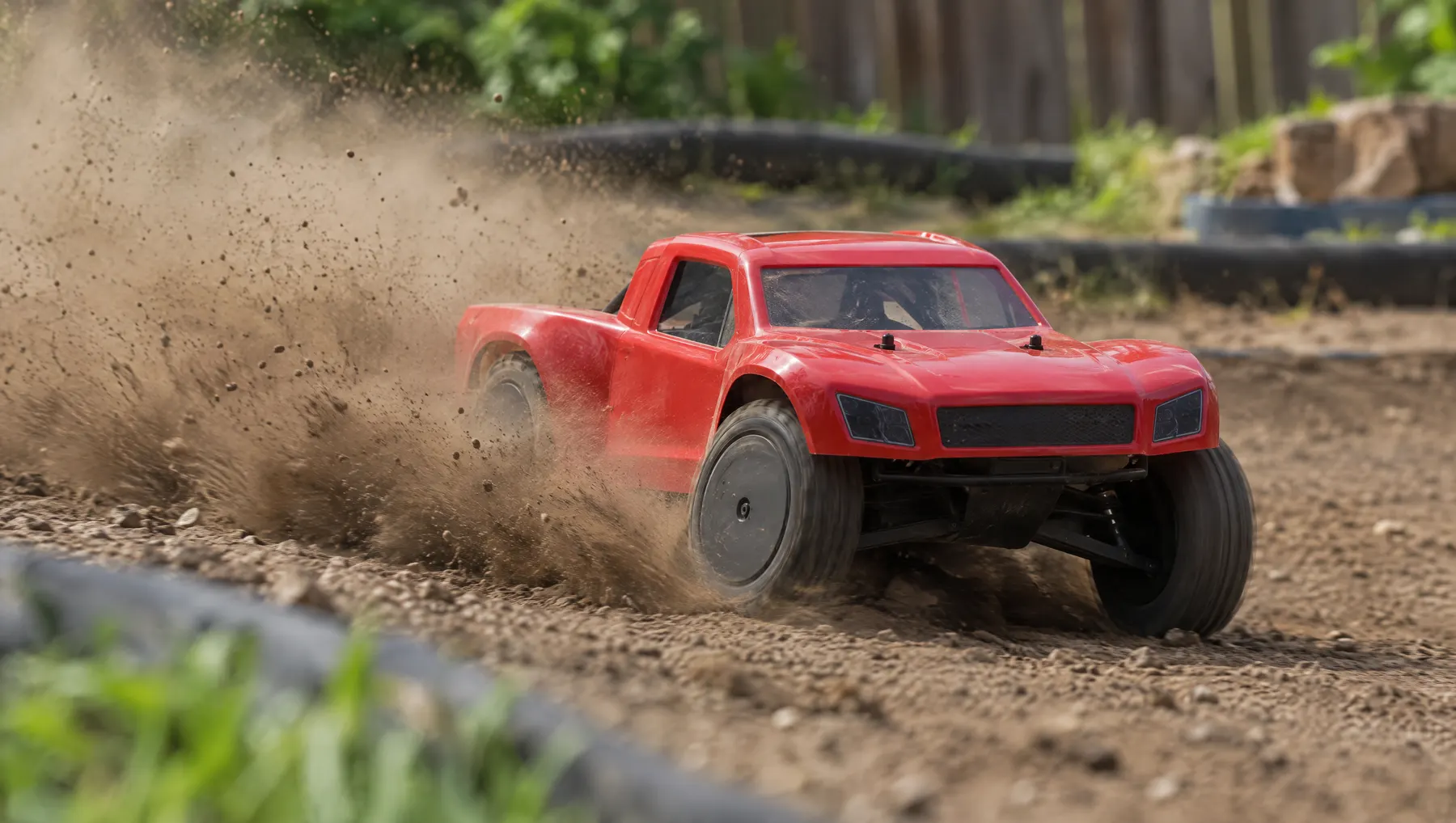 Traxxas Slash 4X4 VXL review
$429.99, 2S to 3S LiPo, or NiMH
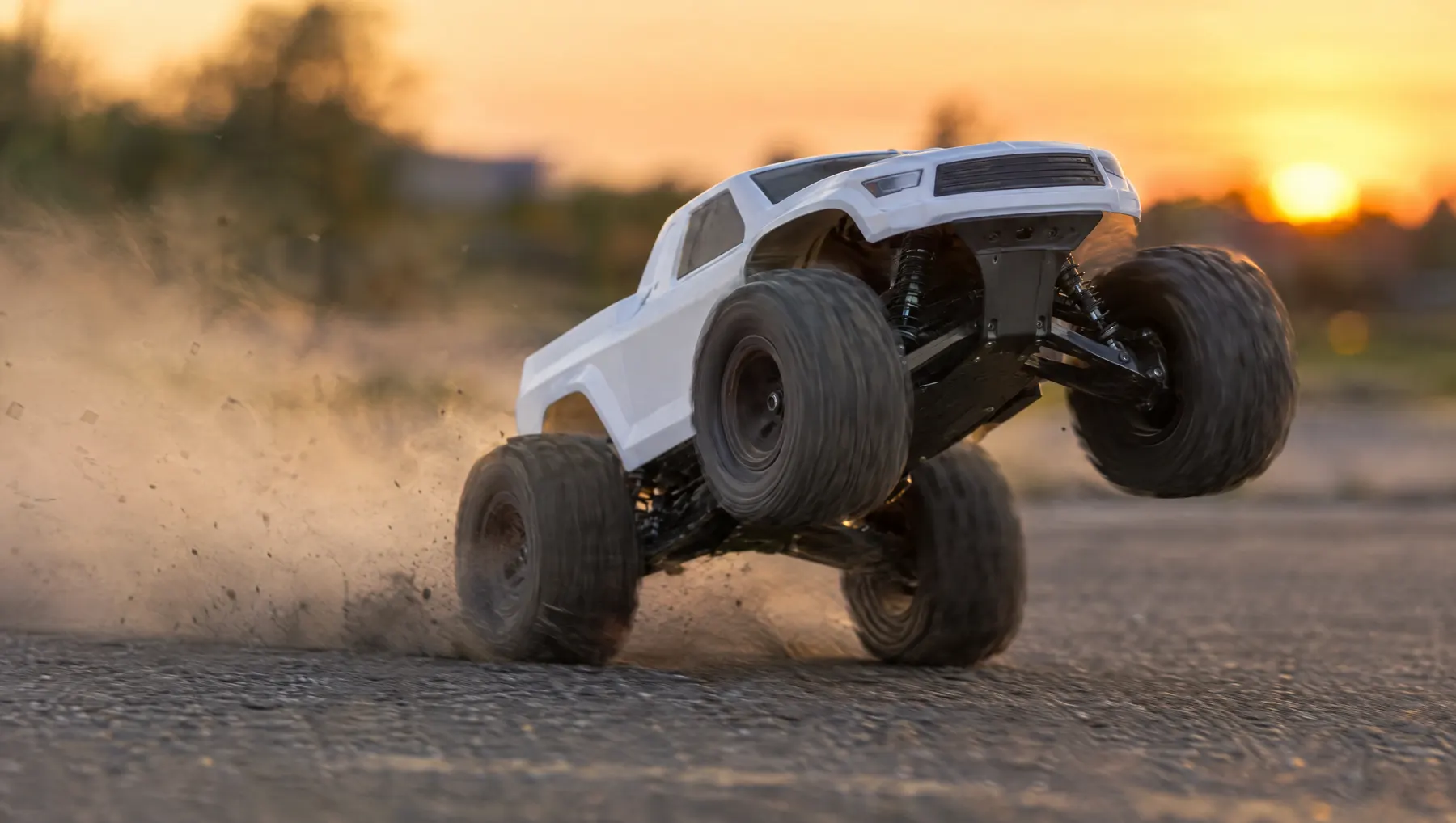 Traxxas Rustler 4X4 VXL review
$429.95, 2S to 3S LiPo, or NiMH
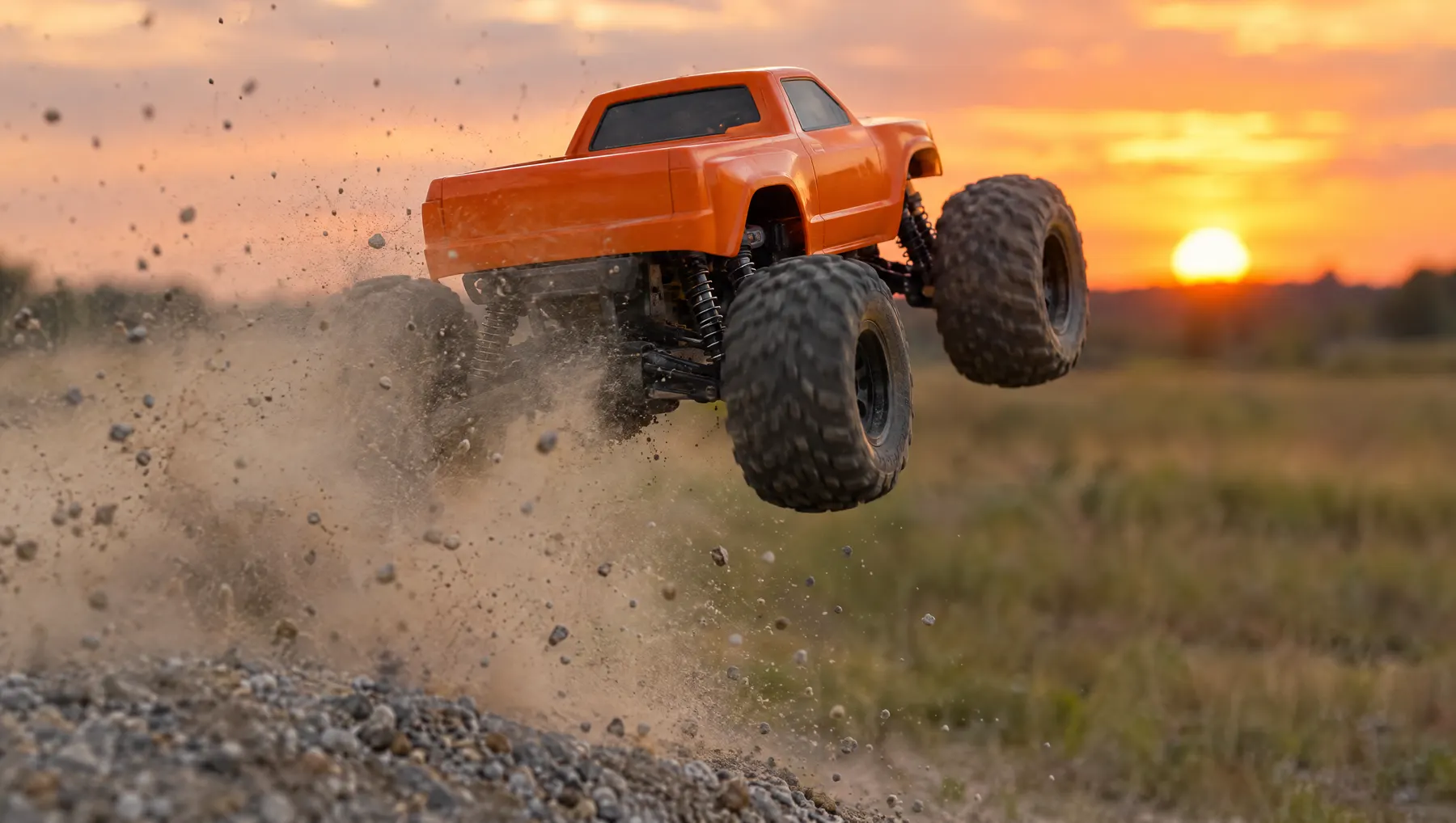 ARRMA Granite 223S review
$339.99, 2S or 3S LiPo
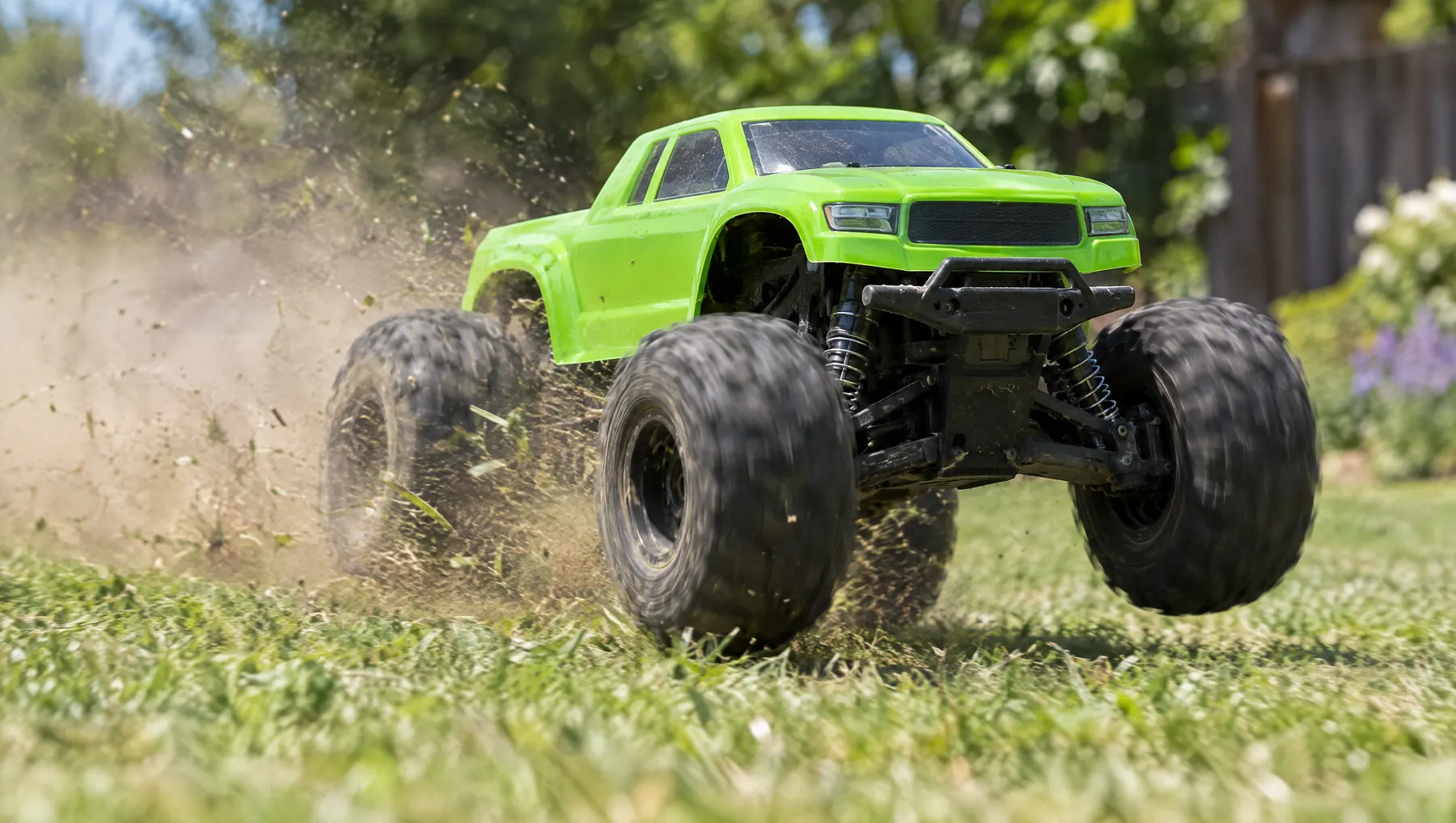 ARRMA Gorgon review
$189.99, Included 8.4V NiMH, 2S LiPo ready
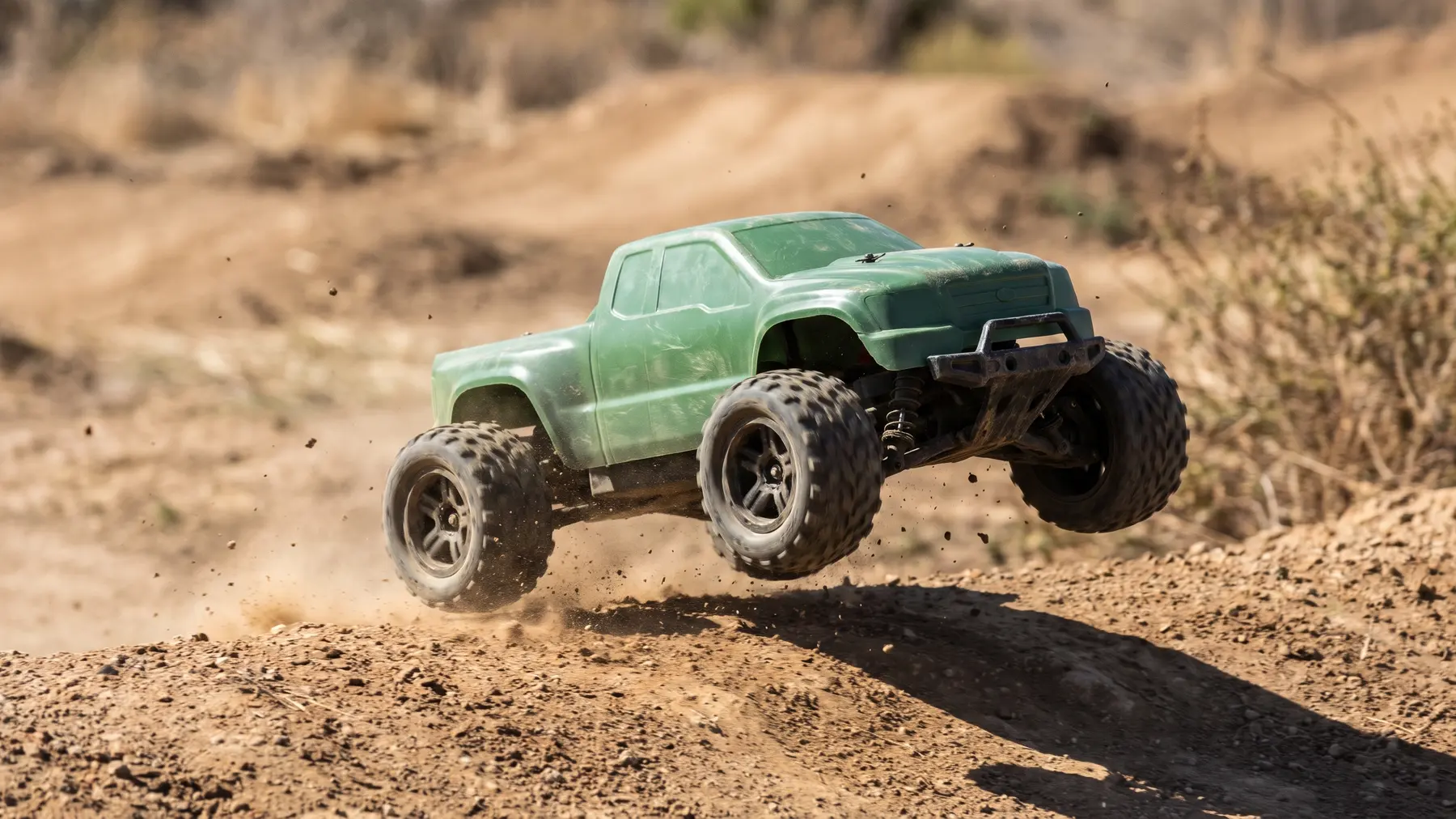 Traxxas Stampede 4X4 VXL review
$449.95, 7-cell NiMH, 2S LiPo or 3S LiPo
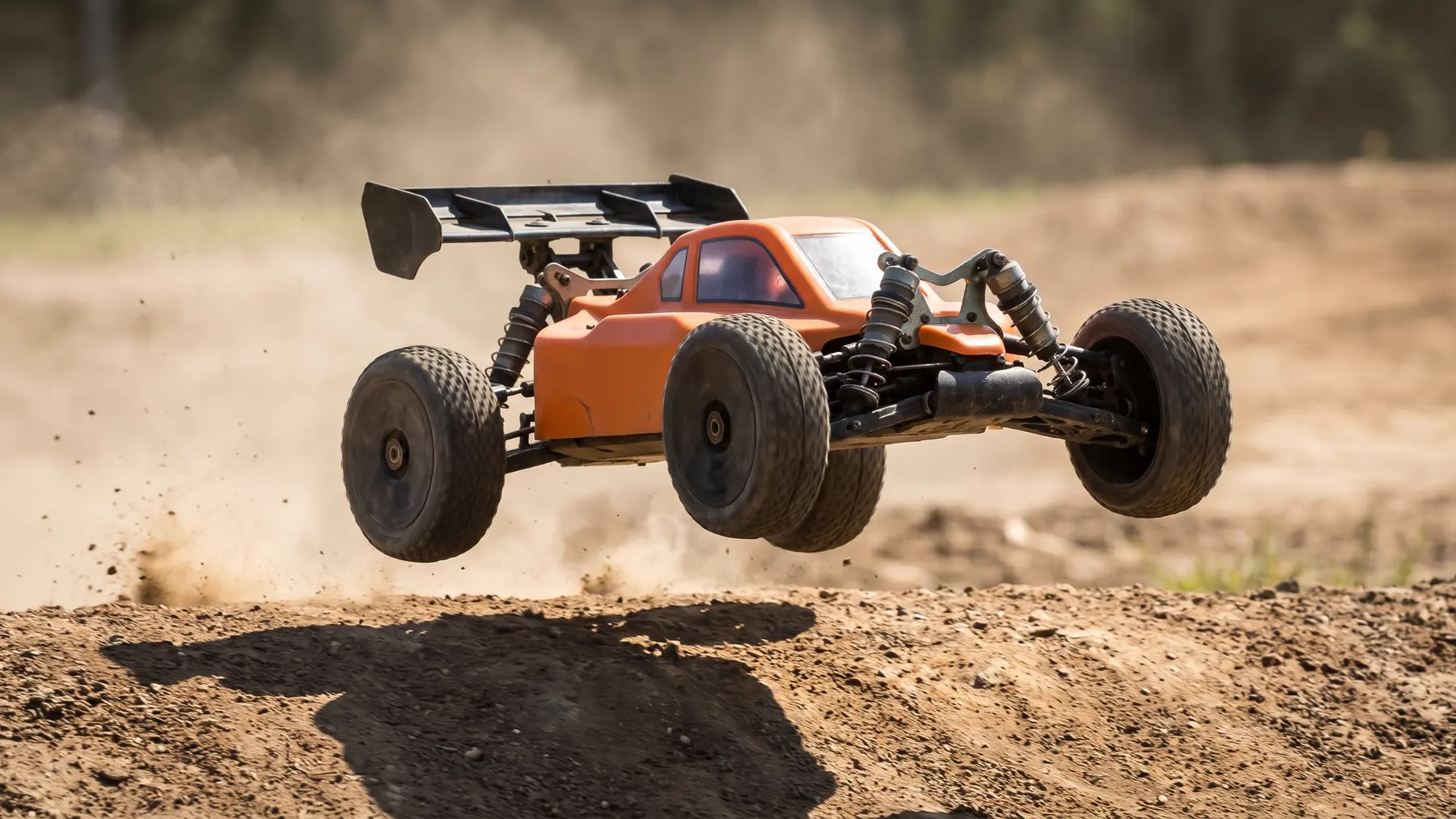 ARRMA Typhon 223S review
$339.99, 2S or 3S LiPo
Common questions
What does a bigger pinion or smaller spur gear do to speed, acceleration and heat?
It lowers the gear ratio, which raises theoretical top speed, slows acceleration and pulls more current, so the motor and ESC run hotter. Over-gearing, where the motor can't pull the taller gearing under load, adds heat without adding speed. Change one tooth at a time and check temperature after a 3 to 5 minute run.
How do you check motor and ESC temperature after gearing up, and what temperatures are safe?
Run the car 3 to 5 minutes, stop immediately, and point an infrared thermometer at the motor can and the ESC. A general brushless guideline is below 160 to 180°F (70 to 82°C), and the motor maker's limit comes first. One hobbyist keeps motors under 180°F, and another says 120 to 150°F is typical when gearing is right. If readings are high, fit a smaller pinion or a larger spur.
How much faster is brushless than brushed, and what does a conversion require?
The gain depends on motor Kv, battery voltage, gearing, weight and tire size. Traxxas claims its Slash 4X4 BL-2s system gives up to 60% more speed and faster acceleration than comparable brushed systems. A conversion needs a brushless motor, a matching ESC, a battery and connector, gearing, possibly a new motor mount, and often drivetrain upgrades, since owners report stripped gears and broken shafts after the swap.
How much faster is 3S than 2S, and what must the ESC and motor support?
At the same Kv and gearing, 3S (11.1 V nominal) gives roughly 50% more theoretical motor speed than 2S (7.4 V). The ESC must explicitly support 3S, and the motor must be approved for it too. Robitronic's Hobbywing example is a motor family approved to 6000 Kv on 2S but only 3500 Kv on 3S. Real speed is lower than the calculation because of load, drivetrain losses and voltage sag.
What does motor Kv mean for speed?
Kv is a motor's approximate unloaded rpm per volt. Robitronic's example is a 3300 Kv motor turning about 27,700 rpm on a full 2S pack at 8.4 V and about 41,600 rpm on a full 3S pack at 12.6 V. Higher Kv means more rpm at the same voltage and gearing, but not automatically more power, and it can mean more current and heat. Higher battery voltage generally calls for a lower Kv.
How much do tires, tire ballooning, weight and the body affect top speed?
All four matter, but the size of the effect depends on the car and conditions. Larger tires raise effective gearing and load the motor, so they can raise theoretical speed while adding heat. Ballooning tires reduce stability and can cost top end, and one source suggests checking the inserts. A lighter car generally accelerates with less load, and a low-drag body can help at high speed.