Skip to content
rcaaars

The best RC drift cars

Updated November 1, 2026

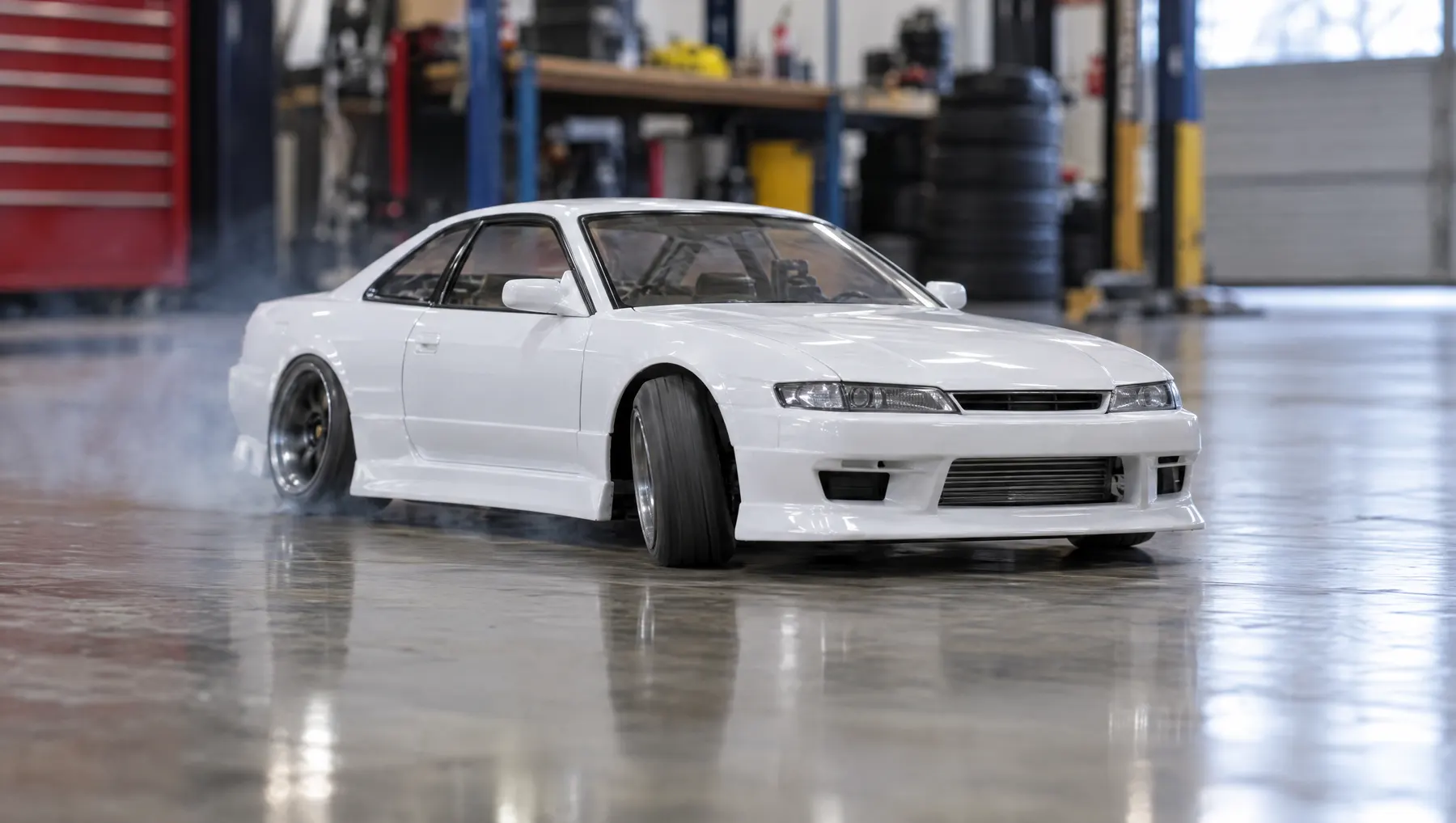
A fictional white RC drift car sliding sideways on polished concrete

The best RC drift car for most buyers who want a real 1/10 car is the MST RMX 2.5, at $399.99. It's a rear-wheel-drive chassis with a brushless motor, full ball bearings and adjustable caster, and owners discuss upgrading many of its parts. It doesn't come with a battery or charger, and owners frequently recommend replacing the stock gyro (some also suggest a better servo), so budget for both.

If you want everything in the box, the Yokomo Rookie Drift is our complete-starter pick at $349.99. If you only want to know whether RC cars that drift are your thing, the Turbo Racing C64 is a $75.99 pocket car that runs on a desk. Redcat and Traxxas each earn a spot for specific reasons below.

This is a subjective ranking built from owner reports, reviews and maker information, with no hands-on testing by us. We haven't driven any of these cars, and how we rank explains the method.

Some links may earn us a commission, at no cost to you. That doesn't change the order. How we rank

Compare the 5 picks

RankCarPriceTop speedSize and driveIn the boxOur scoreBuy
1
MST RMX 2.5

Best overall

$399.99Not listed1/10, RWDNeeds extras6.4 out of 10See it at MST
2
Yokomo Rookie Drift

Best complete starter

$349.99Not listed1/10, RWDEverything6.3 out of 10Compare at Sheldon's Hobbies
3
Redcat RDS

Best for the drift track

$399.99Not listed1/10, RWDNeeds extras6.0 out of 10See it at HobbyQuarters
4
Traxxas 4-Tec Drift

Best for easy parts

$299.95Not listed1/10, RWDNeeds extras5.5 out of 10Compare at RC Superstore
5
Turbo Racing C64

Best mini drift car

$75.99Not listed1:76, RWDEverything5.1 out of 10Compare at Helidirect

Prices checked November 1, 2026. Top speeds are maker claims and often need a bigger battery or optional gearing.

  1. Number 1

    Best overall

    MST RMX 2.5
    An RC drift car in action

    It's the best all-round platform here, with brushless power, real tuning options and, per one owner, a car that drives well from the box. The gyro is the price of admission.

    The RMX 2.5 is a 1/10 rear-drive car with a 257 mm wheelbase, full ball bearings, hydraulic dampers and a 2500kV brushless motor (kV is motor rpm per volt, so a higher number spins faster on the same battery). One owner says it drives well straight out of the box, and owners discuss upgrading many parts, from the gyro to the differential. That headroom is why it's first. It suits someone who wants one car to learn on, keep improving, and maybe take to a local club.

    The main catch is the stock gyro, the unit that senses the rear end swinging out and countersteers for you. Owners report it overcorrects, and with play in the steering the front wheels can oscillate. Owners also report servo gear failures, one in under 40 hours. Those are individual reports, not a measured failure rate, but we'd budget for a better gyro and probably a better servo from day one.

    The real cost: $399.99 buys the car only. Add a 2S LiPo (a two-cell lithium polymer pack), a charger, and possibly AA cells for the transmitter, since contents vary by body style. Owners recommend a shorty pack with a T-style (Deans) connector, and one found a full-size pack wouldn't fit the stock holder.

    Who should pick something else? Anyone without a smooth floor, because dirt, grass and rough ground are out. Anyone who doesn't own a LiPo and charger and wants to skip that shopping should look at the Yokomo Rookie Drift. And if you want a track-focused car at the same price, the Redcat RDS is the rival, though we score the MST higher, 6.4 to 6.0.

    Price
    $399.99
    In the box
    Needs extras
    Top speed
    Not listed
    Our score
    6.4 out of 10

    Owners like

    • An owner reports it drifts smoothly right out of the box.
    • Adjustable caster gives real chassis-tuning options.
    • Full ball bearings and hydraulic dampers come standard.

    Watch out for

    • The stock gyro overcorrects and can make the front wheels oscillate.
    • One owner's servo gears failed in under 40 hours, and another says stripped gears are common.
    • A battery and charger aren't included, and a full-size pack may not fit the holder.
  2. Number 2

    Best complete starter

    Yokomo Rookie Drift

    An RC drift car in action

    The battery and USB charger are in the box, which makes it the least-shopping 1/10 drift car here. For a newcomer, that's worth more than extra tuning room.

    The Rookie Drift is a 1/10 rear-drive RTR (ready to run, meaning assembled) with a 27T brushed motor, a 2.4GHz radio and an installed steering gyro. The box includes a rechargeable battery and a USB charger. You supply a USB power adapter and four AA cells for the transmitter. At $349.99 it costs $50 less than the MST and Redcat, and neither of those includes a battery or charger, so the true gap is wider than the sticker.

    Product descriptions call the RD2.0 chassis easy to start drifting with, and rear-drive plus a gyro is the right recipe for a first drift car. It's the car we'd point a newcomer to, as long as that newcomer has a smooth floor.

    The warning is the radio. One Reddit owner reported the transmitter and receiver both failed within two days, and another commenter called the stock electronics basic. It's a small sample, but it concerns the current RD2.0, so we'd check the radio the moment the car arrives and buy from a seller with easy returns.

    Parts support looks broad. One parts listing runs to hundreds of RD, SD and MD-series parts, though U.S. retailer stock is uneven, and the white GR86 version is listed as backordered at Sheldon's Hobbies. Skip it if you need a car in stock today or want a proven radio. If you already own LiPos and a charger from another car, the MST RMX 2.5 is the stronger buy. If you can't stretch to $349.99, see the cheaper tryout below.

    Price
    $349.99
    In the box
    Everything
    Top speed
    Not listed
    Our score
    6.3 out of 10

    Owners like

    • Buying RTR lowers the starting cost compared with a kit, according to one owner discussion
    • The battery and USB charger are in the box, so there's no LiPo shopping up front
    • The platform fits both standard and short battery sizes

    Watch out for

    • One owner reported the transmitter and receiver both malfunctioned within two days
    • One commenter calls the stock electronics basic and says they may need upgrading
    • Battery clips are made for a hard-case LiPo about 25 mm high, so a NiMH pack may shift slightly
  3. Number 3

    Best for the drift track

    Redcat RDS

    An RC drift car in action

    It's built around carpet, p-tile and polished concrete, includes a gyro, and owners say Yokomo and MST parts fit it. Plan an evening of setup.

    The RDS is a 1/10 rear-drive car with a 540 3300KV brushless motor and a drift gyro. It's reported to work especially well on carpet, p-tile (vinyl floor tile) and polished concrete, and one reviewer found it usable in stock form during a track test. Steering is described as direct and free of slop. That's why it takes the track award.

    It isn't a drive-and-go car. Owners report too much factory camber (wheel lean) and front toe (the angle the wheels point), tight suspension ball cups that make the arms bind, and one found three of four tires loose on their rims. The stock plastic servo horn can strip after a front-wheel hit, and the usual fix is Redcat's aluminum horn, part RER19685. One reviewer calls the RDS a good but not exceptional starting platform with upgrade potential, which we think is fair.

    At $399.99 there's no battery or charger. It takes a 2S LiPo in competition shorty, low-center-of-gravity shorty or standard stick format, and you'll want spare tires and basic drift tools. Owners report Yokomo and MST parts fit for upgrades, which softens future repair bills.

    Pick it if you like to tinker and can reach a smooth drift surface. One owner says the Yokomo RDX drives noticeably better out of the box, especially in steering, so if stock handling matters most, that car is worth a look, though it isn't ranked here. Skip the RDS if you want a casual car for a driveway. Against the MST RMX 2.5 at the same price, we'd lean MST, 6.4 to 6.0, mostly because the RDS asks for more work before it drives right.

    Price
    $399.99
    In the box
    Needs extras
    Top speed
    Not listed
    Our score
    6.0 out of 10

    Owners like

    • The drift gyro is included in the box.
    • Reported to work especially well on carpet, p-tile and polished concrete.
    • Direct steering with no slop, according to one reviewer.

    Watch out for

    • No battery or charger in the box.
    • The plastic servo horn can strip after a front-wheel impact.
    • Tight ball cups can bind the suspension, owners report excess camber and toe, and one had to fix loose tires.
  4. Number 4

    Best for easy parts

    Traxxas 4-Tec Drift

    An RC drift car in action

    Traxxas keeps model-specific parts pages and a U.S. support line, which earns the parts award. A thin owner record and a battery and charger bill keep it fourth.

    The 4-Tec Drift is a 1/10 rear-drive car with a Titan Drift 550 brushed motor, a built-in handbrake and waterproof electronics, per Traxxas. At $299.95 it's the cheapest 1/10 drift car here, but the box has no battery or charger, and the transmitter takes four AA cells. Traxxas says it runs on a 6- or 7-cell NiMH pack or a 2S LiPo with an iD High-Current connector, so check the connector before you buy a battery.

    Parts are the reason it's on the list. Traxxas keeps Parts Finder pages for the Ford Mustang version (105237-4) and the current Nissan 240SX version (105247-4), covering chassis and electronics, and lists a U.S. toll-free number and support email. If you expect to break parts and want one place to order from, that counts.

    The caution is one owner thread, mostly about the earlier Mustang version. It calls the stock servo very slow and says the roughly 60-degree steering angle can spin the car out in tight drifts. It also says the handbrake is assigned to the reverse control. That's one thread about an older body, not a verdict, but a faster servo is where we'd start.

    Add a battery and charger, and the price gap to the Yokomo Rookie Drift shrinks fast. We'd pay the extra $50 for the Yokomo, which includes both, and we score it higher, 6.3 to 5.5. Buy the Traxxas if Traxxas parts support matters to you and you already own a compatible battery and charger. Everyone else should pick the Yokomo or the MST.

    Price
    $299.95
    In the box
    Needs extras
    Top speed
    Not listed
    Our score
    5.5 out of 10

    Owners like

    • Body styling and included electronics make the price feel fair to some owners
    • Built-in handbrake and drift-specific settings
    • Waterproof electronics, per Traxxas

    Watch out for

    • No battery or charger in the box, and the battery needs Traxxas's iD High-Current connector
    • One owner thread, mostly about the Mustang version, calls the stock servo very slow
    • That thread says the roughly 60-degree steering angle can spin the car out in tight drifts
  5. Number 5

    Best mini drift car

    Turbo Racing C64

    An RC drift car in action

    At $75.99 with everything in the box but a USB power source, it's the cheapest way to find out if you like drifting. It's twitchy, so treat it as a desk toy.

    The C64 is a 1:76 rear-drive car about 61 mm long. The box has the car, transmitter, spare body shells, a screwdriver and a USB-C charging cable, and the battery is built in, a 3.7V 55 mAh LiPo. Steering and throttle are proportional, meaning the car responds to how far you move the controls, and an adjustable gyro helps hold slides. It's our best mini RC drift car and the one we'd buy as a cheap drift RC car gift.

    Owners call it twitchy. One found it spun out more readily than the C63, and some report steering that pulls left at neutral or jitters around center. One owner got a working replacement after returning a faulty car, while another said five cars behaved similarly. We'd buy from a seller with an easy return policy. Too much gyro sensitivity causes wobble on straights, and one owner runs about 65%.

    Running costs are close to zero, but the drift wheels wear slick, and owners recommend spares. Owners say parts come through the maker's AliExpress storefront. The control range is only about 30 m, so this is a close-quarters car, and the manual says to keep it away from water.

    Owners point to Turbo Racing's newer C65 as faster and easier to control, so if you want the simplest mini drifter, look there first, though it isn't ranked here. If you want a full-size car, step up to the Yokomo. For a first small RC with more to do, the Axial SCX24 Bronco at $149.99 scores 8.1 against the C64's 5.1 and includes everything, though it's a crawler. More small options are in best mini RC cars.

    Price
    $75.99
    In the box
    Everything
    Top speed
    Not listed
    Our score
    5.1 out of 10

    Owners like

    • Proportional steering and throttle beat toy-grade minis.
    • The adjustable gyro helps hold a slide.
    • Spare body shells and a screwdriver come in the box.

    Watch out for

    • Some owners report steering that drifts left at neutral or jitters around center.
    • Too much gyro sensitivity causes wobble on straights.
    • Drift wheels wear slick, and parts come through the maker's AliExpress storefront.

What to know before you buy

Pick by what's in the box, then by where you'll drive

Start with the shopping list, because that decides more than horsepower does. The Yokomo Rookie Drift is the only 1/10 car in this ranking with a battery and USB charger in the box. The MST RMX 2.5, the Redcat RDS and the Traxxas 4-Tec Drift all leave you buying a battery and a charger. If you already own a 2S LiPo (a two-cell lithium polymer pack) and a charger from another car, that advantage shrinks, and the MST becomes the stronger platform.

Then look at your floor. If you can reach a drift track with carpet, p-tile or polished concrete, the Redcat is reported to work especially well on carpet, p-tile and polished concrete, and owners say Yokomo and MST parts fit it when you start upgrading. If you've got polished concrete, smooth flooring or suitable carpet at home, any of the 1/10 cars can work, and the Yokomo's simplicity wins. Check your own floor first. If you have a desk and a $75.99 budget, the Turbo Racing C64 is the only one that makes sense.

Adults shopping for RC drift cars face one simple question: will you drive it weekly? If yes, buy a 1/10 car and skip the toy. If you're not sure, a pocket drifter is a cheap way to find out before you commit $350 or more. For options beyond drifting, see our RC cars for adults ranking.

Total beginners to RC should know that owners describe rear-drive as harder to learn than all-wheel drive. If you've never driven a hobby-grade car, our RC cars for beginners list has easier starts. If you want drift anyway, we'd buy the Yokomo, since the gyro is installed and the battery and charger are in the box.

Rear-drive is the hard way in, and the gyro makes it workable

Every drift car covered here is rear-wheel drive. Owners describe all-wheel drive as more forgiving for a first-timer and rear-drive as harder to learn but closer to real drifting. Experienced hobbyists also say skills transfer poorly from AWD to RWD, so starting on AWD can mean relearning the car later. That makes RWD the better fit if you're heading toward track drifting. The tradeoff is real, though. If you only want casual sliding around the house, a cheap AWD car on hard plastic tires can do it, and none of our picks is that car.

A rear-drive car also normally needs a gyro. A gyro senses the car rotating and applies countersteer automatically, so you correct less yourself. Hobbyists commonly treat one as essential for RWD, and some advise against adding one to AWD because it can limit steering angle. The Yokomo has one installed, the Redcat includes one, the MST has a stock unit that owners frequently replace, and the C64 has an adjustable built-in gyro. For the Traxxas 4-Tec we couldn't confirm that one ships with a gyro, so check the listing before you order, because it changes what you'll spend.

Gyro sensitivity is worth learning on whatever car you buy. On the C64, owners say too much sensitivity makes the car wobble on straights, and one runs about 65%. Check your own car's gyro instructions for how to adjust it.

Spend on steering before power. One hobbyist says a standard motor is enough at first and recommends a fast steering servo instead, and one MST owner says a better transmitter may matter more than extra motor power. We agree. It's why the 4-Tec's slow stock servo, as one owner described it, worries us more than its brushed motor.

What owning a drift car costs after the sticker price

Sticker prices here run from $75.99 to $399.99, but they aren't comparable. The Yokomo at $349.99 includes its battery and charger, so you add a USB adapter and four AA cells. The MST and Redcat at $399.99 and the Traxxas at $299.95 don't include either, and a 2S LiPo and a charger are separate purchases. We won't guess a battery price, because it varies by brand and capacity, but price it before you decide the Traxxas is the bargain.

Tires are the running cost that surprises people. One owner puts a four-tire set at about $60 or more, and another budgets about $70 in tires for every two battery packs. Hobbyists say drifting on polished concrete or carpet involves little impact and little wear compared with high-power street driving, so your bill should run lower. We'd still buy a spare set with the car.

Then come the upgrades owners keep naming. On the Redcat it's the aluminum servo horn, part RER19685, because the plastic one can strip. On the MST it's the gyro, and some owners add a better servo. On the 4-Tec it's a faster servo. On the Yokomo it's a new radio, if yours fails. Those costs add up on top of the battery, charger and tires, so we'd plan on the sticker price plus a meaningful add-on bill.

Upkeep is mostly small. One owner recommends threadlocker, a liquid that stops screws backing out, on screws that go into metal. Watch for worn bearings and bushings and bent axles after impacts, and know that a rebuild with new parts gets costly once play develops. Aggressive driving wears things faster, and smooth-floor drifting is gentler than off-road.

A kit build means buying many parts separately: chassis, body shell and paint, motor, ESC (the electronic speed control), steering servo, radio, battery and charger. One hobbyist estimates a few hundred dollars if you own none of it, and one owner says $250 can cover a Tamiya chassis, though that isn't a complete build. For a cheap drift RC car, the ready-to-run cars here skip the parts hunt. For other low-priced options, see best RC cars under $200 and best cheap RC cars.

Surfaces and tires decide whether these cars work at all

Drift cars want smooth, low-grip floors, such as polished concrete, smooth flooring and suitable carpet. One MST owner says they use theirs only on polished concrete or exceptionally smooth ground. The Redcat is reported to work especially well on carpet, p-tile and polished concrete, and it gets less out of rough asphalt or unpolished concrete. The C64 gets good reports on laminate countertops and Turbo Racing's own drift track, but one owner found a PVC tablecloth too sticky.

Tires matter as much as the car. Hobbyists say to choose tires for the floor you actually have rather than assume the stock set suits it, and they recommend hard plastic drift tires for AWD setups. One Redcat owner suggests changing tires for your surface and practicing before modifying much. One MST owner changed only the tires at first, to DS Racing Finix LF-5s, for a drift feel they already knew.

Outside is out. Dirt, grass and rough ground are useless for the MST, and the C64 is too small and low for rough floors or outdoor terrain. If a driveway is your only surface, you want a different kind of car, so see off-road RC cars, or RC rock crawlers for slow, controlled driving.

Mistakes buyers make with drift cars

Buying cheap, then buying again. Owners say low-priced purchases can lead to buying again, and that a quality drift car takes real commitment. The exception is a deliberate cheap tryout, which is what the C64 is for. Buy it knowing it's a toy-size test, not a stepping stone to a track.

Ignoring where you want to end up. AWD is easier, but owners caution it behaves differently from RWD. Experienced hobbyists commonly suggest either starting cheap on a used chassis or an AWD Tamiya TT-01D-style car to test your interest, or going straight to RWD if serious drifting is the goal. Decide before you pay.

Not checking the package. MST contents vary by body style (GR86RB, A90RB, LBMT, E92), so confirm what's in your box. Batteries are the bigger trap. The MST uses a T-style (Deans) connector, and one owner found a full-size pack wouldn't fit. The Yokomo's clips are made for a hard-case LiPo about 25 mm high. The Traxxas wants an iD High-Current connector. A battery that doesn't fit or plug in is a wasted purchase.

Buying used without a close look. Owners warn that second-hand cars can hide worn bearings and bushings, bent axles and other defects. If you go used, check each wheel for play before you pay.

Paying brushless money when you don't need it. Retailers list brushed RMX 2.5 versions for substantially less than the brushless one we ranked, and if you're only testing the hobby, we'd look hard at that. And don't shop on top speed. None of these cars lists one, because drifting is about control.

Common questions

Are AWD or RWD drift cars better for beginners?

AWD is easier to control at first, according to owners. RWD is harder to learn but closer to real drifting, and skills carry over poorly from AWD to RWD. If you want the track hobby, we'd start with RWD and a gyro, like every car in this ranking. If you only want casual sliding, AWD is the gentler route.

What surface do RC drift cars need?

A smooth, low-grip one, such as polished concrete, smooth flooring or suitable carpet. Rough asphalt, dirt and grass are poor choices. Match your tires to the floor you have, since stock tires won't suit every surface.

What does a gyro do on an RC drift car?

A gyro senses the car rotating and applies countersteer for you, which helps hold a drift. Hobbyists treat it as essential on rear-drive cars. Sensitivity matters: on the C64, owners say too much makes the car wobble on straights, so check your own car's gyro instructions for how to adjust it.

Can any RC car drift?

Many RC cars can be made to slide, especially cheap AWD cars on hard plastic tires, but that isn't the same as controlled drifting. A purpose-built drift chassis with a gyro is far easier to hold in a slide. For sustained drifts, we'd buy one of the cars in this ranking rather than convert a basher.

What is the best cheap drift RC car?

The Turbo Racing C64 at $75.99 is the cheapest, and it includes everything but a USB power source. It's a 1:76 desk car, though. Among 1/10 cars, the Yokomo Rookie Drift at $349.99 gives the most for the money because the battery and charger are in the box. More small options are in best mini RC cars.

Which RC drift cars are best for adults?

For an adult who wants a real hobby, we'd choose the MST RMX 2.5 for its upgrade path or the Yokomo Rookie Drift for its complete box. Both are 1/10 rear-drive cars that need a smooth floor. For wider options, see best RC cars overall.

More rankings

Guides for new owners